I saw this post yesterday:
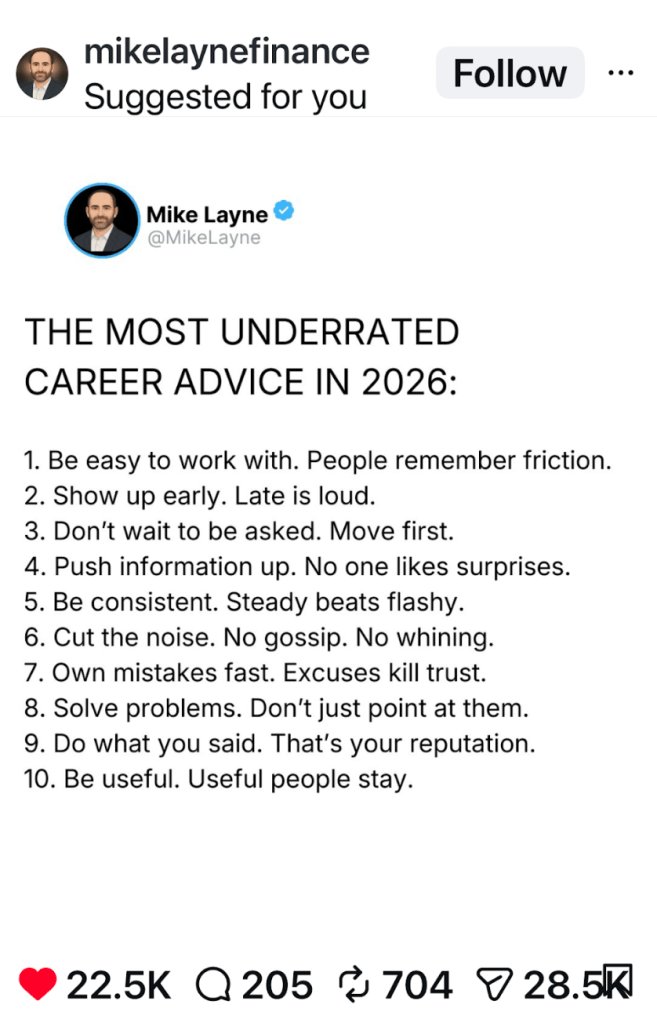
That is absolutely wonderful advice.
Whenever I hear that a law student or a new lawyer has gotten into trouble, typically it’s because the person has tried to turn in something close to perfect, but in doing so, the person blew past a deadline.
For whatever reason, law students sometimes don’t understand that deadlines are real in the “real world.” Students can get extensions on papers and can get an “incomplete”on a final exam under the right circumstances. In the real world, lawyers can sometimes get extensions, but those extensions are few and far between. So when a senior person expects a draft (and we all know that “draft” means “polished,” right?) at a certain time and doesn’t get it, that missed deadline throws the senior person’s entire project into disarray. Will that senior person ever trust that junior lawyer with another assignment? Don’t count on it. The most brilliant suggestion in the world means nothing if it’s made too late.
Recently, I had a problem with a law review that took months longer than it had promised to get our issue into print. Maybe the student editors were at fault, though my guess is that some of the problem had to do with author delays on the students’ edits. (I doubt that “late responses” represents the whole story, though, and I know that at least two of us were timely in responding to our edits.) I found the student editors to be effective and helpful, and we’ll never know the full reason for the late issue. The whole situation reminds me of when I was a student editor (I was a notes editor) and our law review was read the riot act by two professors who had waited months for their article to go to print. I totally get their anger now.
Perhaps we professors are at fault. For those of us who still have a foot in the real world of practice, deadlines are “still a thing,” and we can pass that message along to our students. For those who haven’t practiced in a while, maybe they’ve forgotten the pressures of deadlines. (On the other hand, we still have grading deadlines….) But when we don’t teach our students the consequences of blowing past a deadline, we set them up for failure when they begin their lives as practicing lawyers.
The fact is that lawyers have (1) our brains and (2) our reputations. That’s it. That’s all we have. In a world in which AI is replacing legal scutwork at an astonishing pace, junior lawyers have to make sure that they’re more valuable to their employer than a Harvey seat license: they have to do more than what Harvey can do. That value that we provide comes in part from our creativity, in part from our emotional intelligence, and in part from keeping our word. The most popular associate is the one who does great work on time.
Take a look at those 10 lessons again. They’ll serve you well.

